
School of International Education Hosts “Camel Spirit ∙ Chinese Elegance” Salon: Chinese Paper-cutting Intangible Heritage Workshop
On November 6, the School of International Education and the Logistics Services Department of CUEB jointly hosted the “Camel Spirit ∙ Chinese Style” Salon themed on Chinese paper-cutting. Yang Hongshun, Deputy Secretary-General of the Paper-cut Art Branch under the Chinese Culture Promotion Society (CCPS) and inheritor of intangible cultural heritage of paper cutting from Baodi, Tianjin, delivered a lecture and guided international students to experience this traditional Chinese folk art.
In this lecture, starting with the origins of paper-cutting, Yang traced the evolution of this traditional openwork art from its early gold foil carvings to inscription on UNESCO’s Representative List of the Intangible Cultural Heritage of Humanity. To help students form an intuitive understanding, he showed them the crafting tools one by one, including Xuan paper, scissors, carving knives and wax cutting boards. He also interpreted the cultural implications behind classic motifs such as dragon and fish patterns, which embody the time-honored Chinese wish for blessings and good fortune. Additionally, he demonstrated the four-step workflow for folded symmetrical paper-cutting and briefly contrasted regional stylistic differences, as northern paper-cutting features bold, unrestrained aesthetics while southern works are marked by delicate craftsmanship.
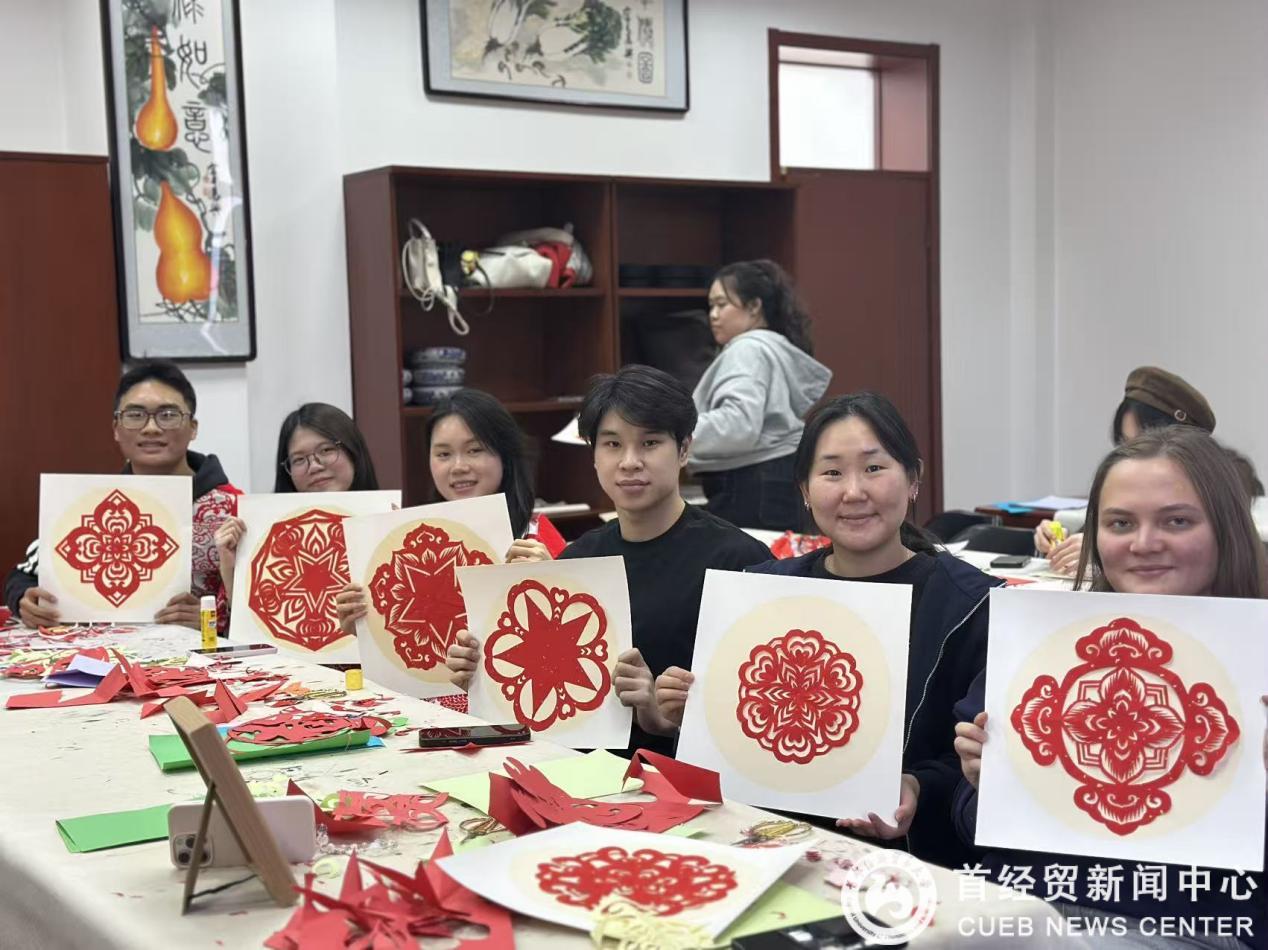
Following the lecture came a hands-on session. Equipped with red paper and scissors, international students created their very first paper-cut pieces under guidance. They folded the paper carefully, cut along the templates, and unfolded their works. As symmetrical “Fu” characters and window-grille motifs took shape before their eyes, the students truly experienced the delicacy and joy of this traditional craft.
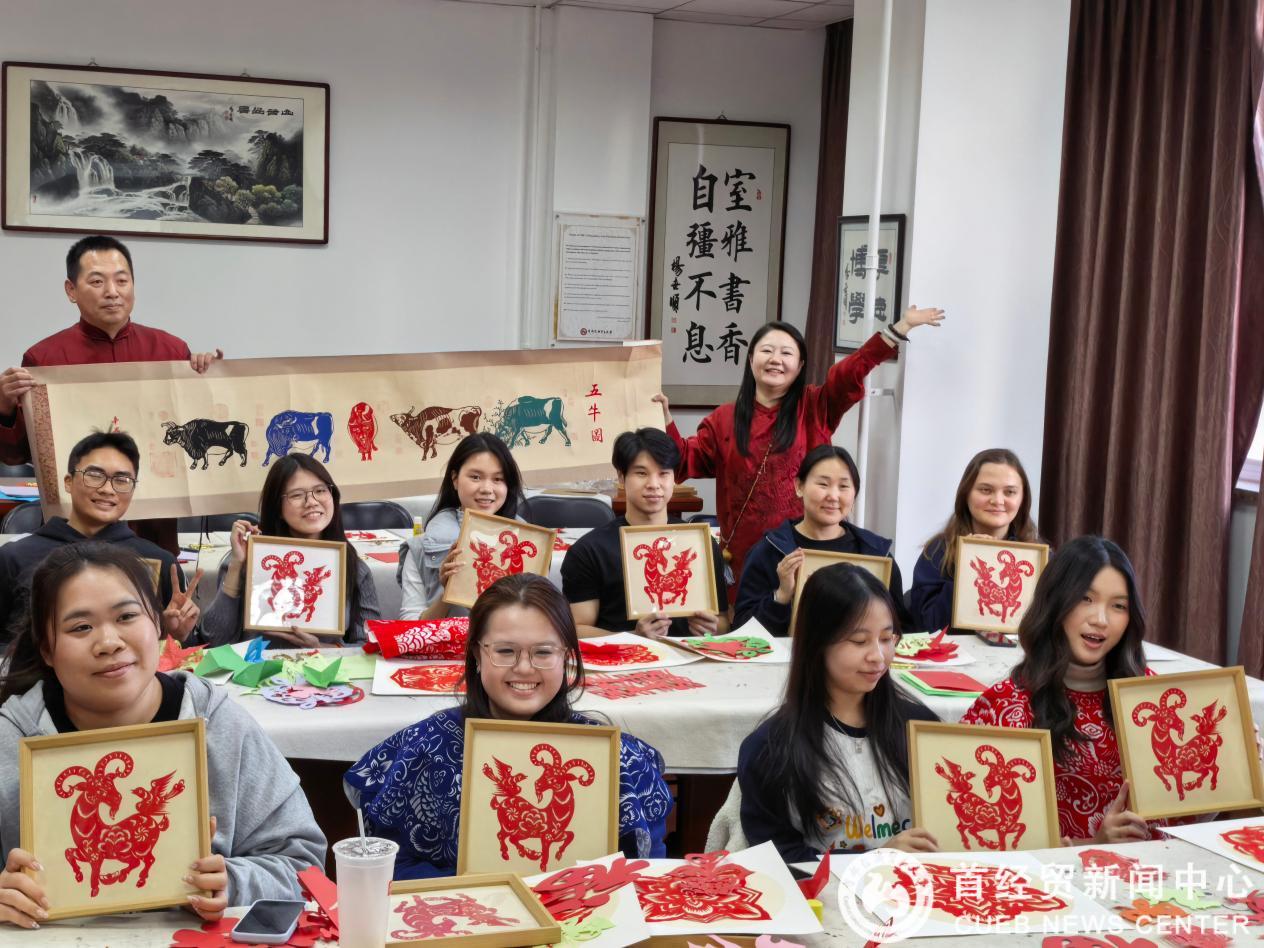
This activity not only enabled international students to learn basic paper-cutting techniques, but also encouraged them to explore Chinese folk culture through these patterns. Going forward, the School of International Education will continue to roll out a series of intangible cultural heritage experience events to build platforms for mutual learning among civilizations and advance the international communication of fine traditional Chinese culture.
HOT NEWS
- 1 School of International Education Hosts “Camel Spirit ∙ Chinese Elegan...
- 2 School of International Education Hosts “Camel Spirit ∙ Chinese Elegan...
- 3 CUEB Approved to Establish Postdoctoral Research Station in Theoretica...
- Vice President Li Kunpeng Meets with EMBA Delegation from Dublin City ...
- Vice President Li Kunpeng Meets with Delegation from Rajapark Institut...