
My Story with CUEB International Students | Lang Lihua: Where Global Warmth Meets Chinese Depth
Since 1986, CUEB has seen a boom in international student education, cultivating over 20,000 overseas students from more than 90 countries and regions. This has significantly promoted multicultural integration, established an open, inclusive, and dynamic framework for international student cultivation, and greatly enhanced the university’s internationalization. Especially since the Fifth Party Congress of CUEB, we have vigorously advanced the reform of its open education system, implemented the “Silk Road Initiative” to improve the quality of domestic and international cooperation, and constructed a new pattern of high-level open education. Starting today, the Publicity Department of the Party Committee (News Center) and the School of International Education jointly launch the special feature My Story with CUEB International Students. This series will vividly present touching stories between CUEB faculty and international students, polishing the “Study in China” brand in Beijing, and aims to show readers with a colorful and vibrant picture of international education.
Internationalization is not a one-way output, but a mutual achievement. Here, it is not only about imparting economic wisdom, but also about building a bridge of understanding between China and the world. With exchange as the bond and mutual trust as the cornerstone, the flower of mutual learning among civilizations blooms enduringly as we walk hand in hand.
As one of the key builders and promoters of the internationalization process at the School of Economics, the stories of international students are, in the mind of Professor Lang Lihua, the former School of Economics Dean, a mission and responsibility that transcends mountains and seas, as well as a vivid painting of love and education. Today, let us hear the touching story of the School of Economics connecting with the world through Lang’s narration.
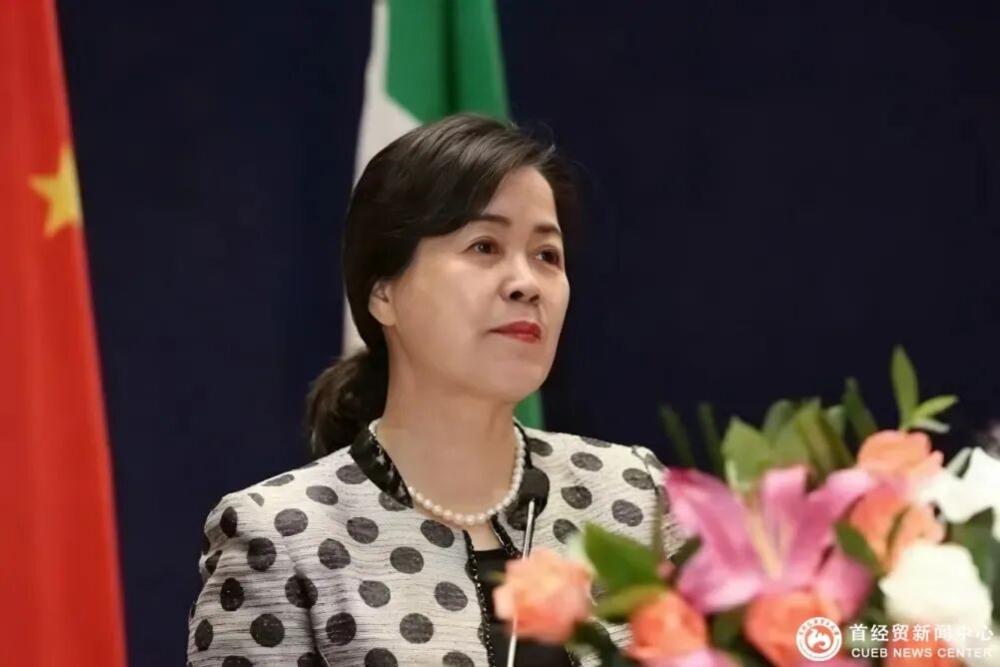
Lang Lihua presides over the Sino-European Center in Finance and Economic Development Establishment and Signing Ceremony.
As early as 2003, the School of Economics began exploring the cultivation of international students. In 2006, the first batch of international students from Novancia Business School Paris in France opened the door to international exchange. Subsequently, English-taught Master’s and PhD programs, as well as various long-term and short-term study abroad projects, were launched. In the same year, an international class was established in the major of International Economics and Trade at the School of Economics to admit international students, offering over ten pure English professional courses. Since 2007, the School of Economics has cooperated with the School of International Education to enroll graduate students from around the world pursuing Master’s and PhD degrees in Applied Economics, recruited by the Ministry of Education of the People’s Republic of China. Today, the School has established cooperative relationships with over 20 overseas institutions, and thousands of students from partner schools have participated in bidirectional international exchanges.
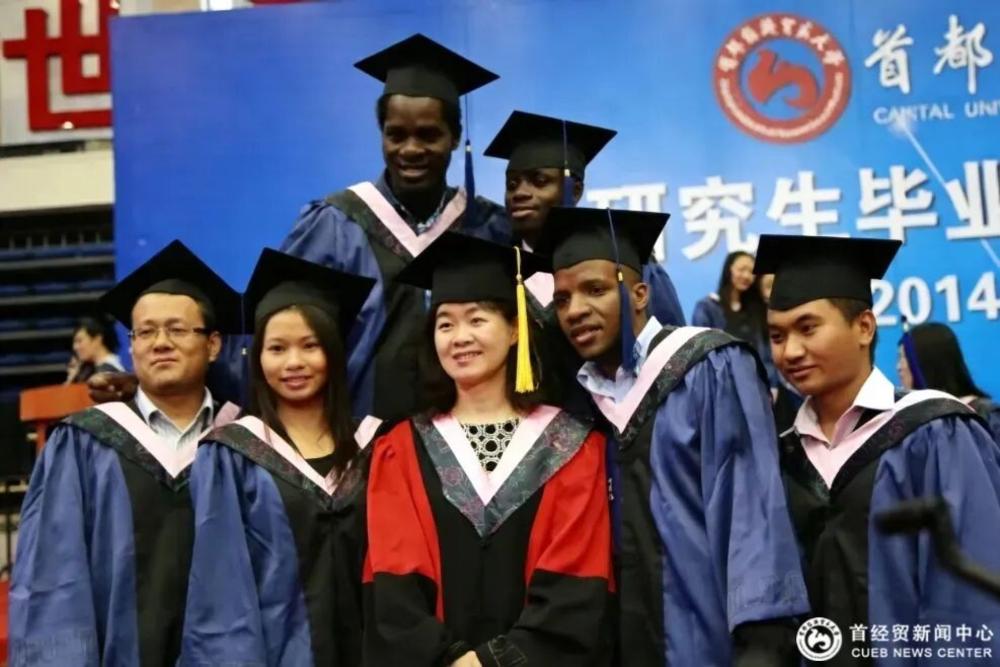
Lang Lihua with international students at the 2014 graduation ceremony
Teaching with Practice: Economic Practices Rooted in China
Batches of exchange students from partner schools in France, Germany, Sweden, Finland, and Italy have established enduring friendships at CUEB. “They worked hard and sweated alongside students from the School of Economics in classrooms and on the sports field,” Lang recalls. “The international students integrated very quickly. Two students from Sweden applied to continue their studies in China after the semester ended; a French student in the dual-degree program chose to stay in China after graduation and has achieved success in the wine trade. I am delighted to see him put what he learned into practice.”
The School of Economics always emphasizes taking knowledge out of textbooks and focuses on cultivating students’ ability to solve real-world problems. RAHMAN, a 2013 International Trade student from Pakistan, has maintained contact with his supervisor Lang for ten years since graduation. He describes his relationship with China as “Iron Brother” (a Chinese nickname for Pakistan-China friendship). China’s tremendous achievements in socio-economic development, technological progress, poverty alleviation, and trade enhancement—along with the fruitful and robust results of major economic and trade cooperation and connectivity projects under the “Belt and Road” Initiative—were the reasons he chose to study at CUEB. Lang recalls that this student majored in Applied Economics, focusing on International Economics and Trade, which is highly relevant to his subsequent work in economics teaching, research paper writing, and project development, laying a solid foundation for his career.
Studying with Ambition: Patriotism Transcending Mountains and Seas
International students from around the world come from different cultural backgrounds, with different pursuits and personalities. In Lang’s impression, East Asian students are diligent, Latin American students are cheerful and lively, and European students have distinct personalities. For students from developing countries, their study journey often carries the dual expectations of the individual and their nation. Max from Malawi, after earning his PhD degree, entered the government’s economic sector in his country. With a deep understanding of China-Africa cooperation mechanisms, he accompanied the president at the Forum on China-Africa Cooperation as a core official. His doctoral dissertation on the evolutionary path of the West African Monetary Zone is a prime example of academic research closely integrated with national development needs. Similarly, Taylor from Tanzania overcame challenges such as online teaching. After graduation, he continued to teach at a university, integrating the economic methods he learned here into his teaching to cultivate economic professionals for Tanzania. Most international students choose to return to their mother lands after graduation, bridging economic and trade exchanges with China. “Their diligence and persistence in academics are touching because they carry the hope of their nations,” Lang says. This sense of mission is also reflected in their identification with their own culture. “At a graduation ceremony, a Vietnamese student came on stage wearing the elegant traditional Ao Dai, making the ceremony very ritualistic.” Lang notes.
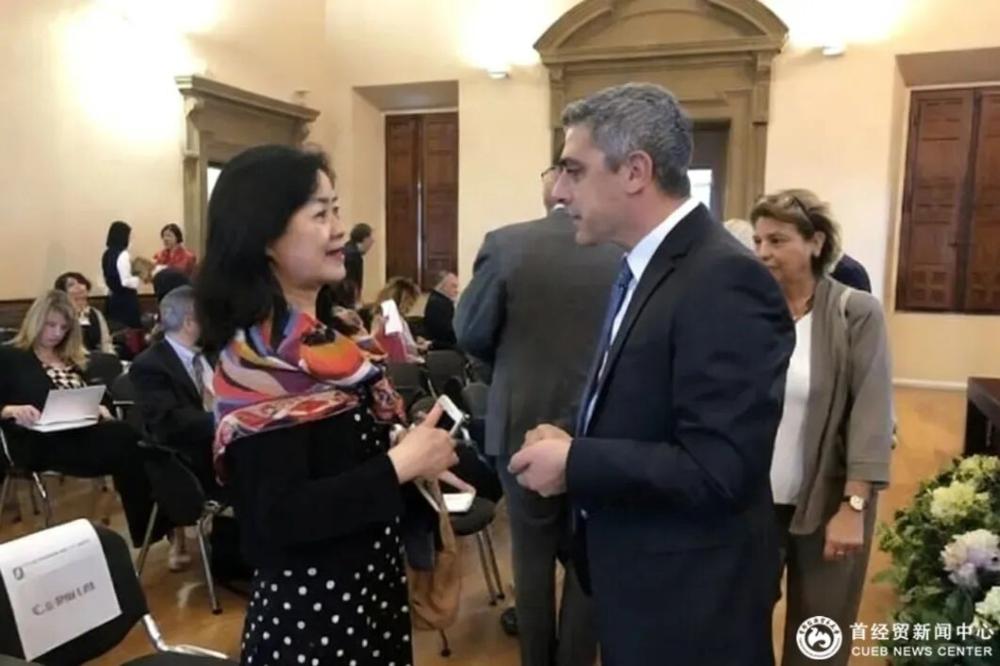
Lang Lihua meets with the head of the International Office at the University of Rome Tor Vergata at an international conference in Rome.
Emotions can always resonate across mountains and seas. Recalling these young faces from around the world, Lang s thoughts drift back to the early days of reform and opening up, when the nation’s gates first opened and a large number of Chinese students traveled abroad. What surged in their hearts was a pulse similar to these international students: a deep desire to change the fate of themselves, their families and country, a thirst for cutting-edge knowledge, and a silent vow to return and serve their hometown after success. Time flows, and the scene has shifted from “going global” to “bringing in”, but the spiritual core that drives individuals forward and closely links personal journeys with the grand narrative has spanned eras. This makes her deeply realize that the core of the internationalization wave in education is always human growth and dialogue among civilizations, regardless of where the tide comes from.
Connecting with Hearts: Cultural Echoes of “Soft Integration” and “Hard Connectivity”
The profound significance of internationalized education goes beyond knowledge transmission, lying in the daily, in-depth, and sincere integration between different civilizations. Cultural understanding and appreciation extend beyond campus time, growing naturally in daily interactions. Students of different nationalities stay up late together in the library preparing for exams, and taste various Chinese cuisines together in the cafeteria. The School of Economics and the School of International Education also organize study tours across China, leading students to deeply understand the diversity of Chinese culture and social landscape: learning Chinese calligraphy and Tai Chi courses is full of fun, while visiting Shaolin Temple in Henan Province and Yili Factory in Inner Mongolia is an unforgettable experience. During the New Year Festival, international students make dumplings together. “The most impressive memory was going to Panggezhuang in Daxing District, Beijing— a village renownedfor its sweet and delicious watermelons — to pick and taste them. The villagers and village chief received them warmly, and the students ate every last piece. They seem to get truly integrated into the beautiful and passionate summer of the capital,” Lang says with a smile.
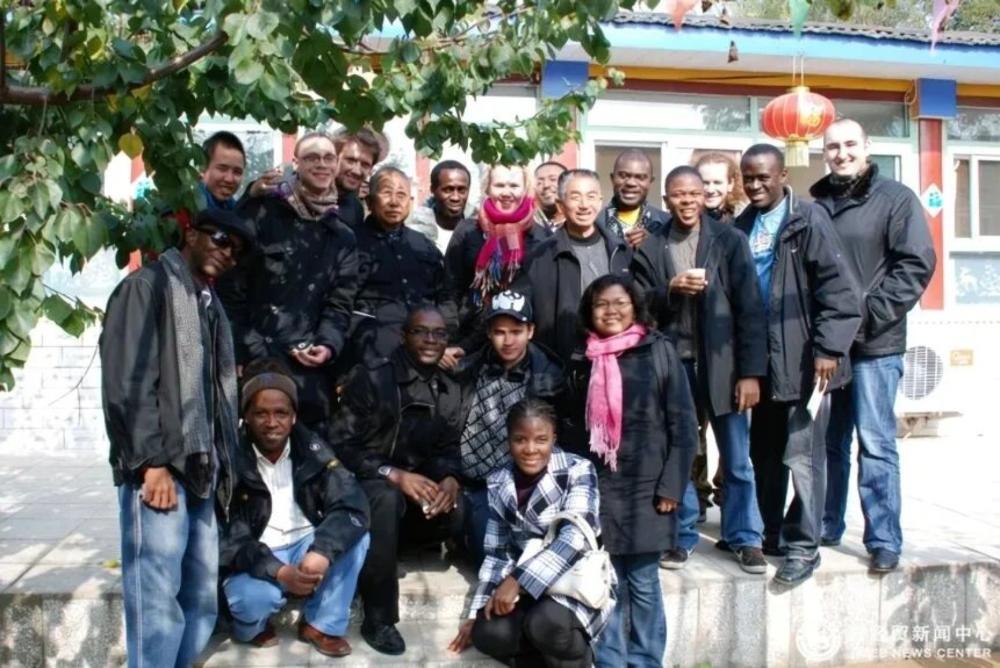
International students and villagers pose for a group photo in Panggezhuang Village, Daxing District, Beijing.
“The value of internationalized education lies in building a bridge for the flow of knowledge, emotion, and opportunities, allowing people from different cultures to gain new knowledge and forge friendships in integration and mutual understanding.” In their spare time, in streets and alleys, students from various countries observe the vibrant vitality of Chinese society through communication.
International students have stated that from the moment they arrived in China, whether strangers, familiar friends, or campus teachers and students, everyone has given them selfless help and support.
Meanwhile, in addition to “soft integration” in culture, “hard connectivity” is also a key step in internationalization. Deeply integrated education not only cultivates a group of “China-knowing” international talents who truly understand China, but also opens a window for Chinese teachers and students to observe the world. In 2009, the School of Economics was approved as a national “Experimental Zone for Cultivating Internationalized Economics Talents.” In 2013, “International Business” was approved as a national brand course for international students taught in English. International students education has featured education at the School of Economics of CUEB.
Generations of teachers and students at the School of Economics, represented by Lang Lihua, shall continue to promote exchanges through education.
Faculty Profile
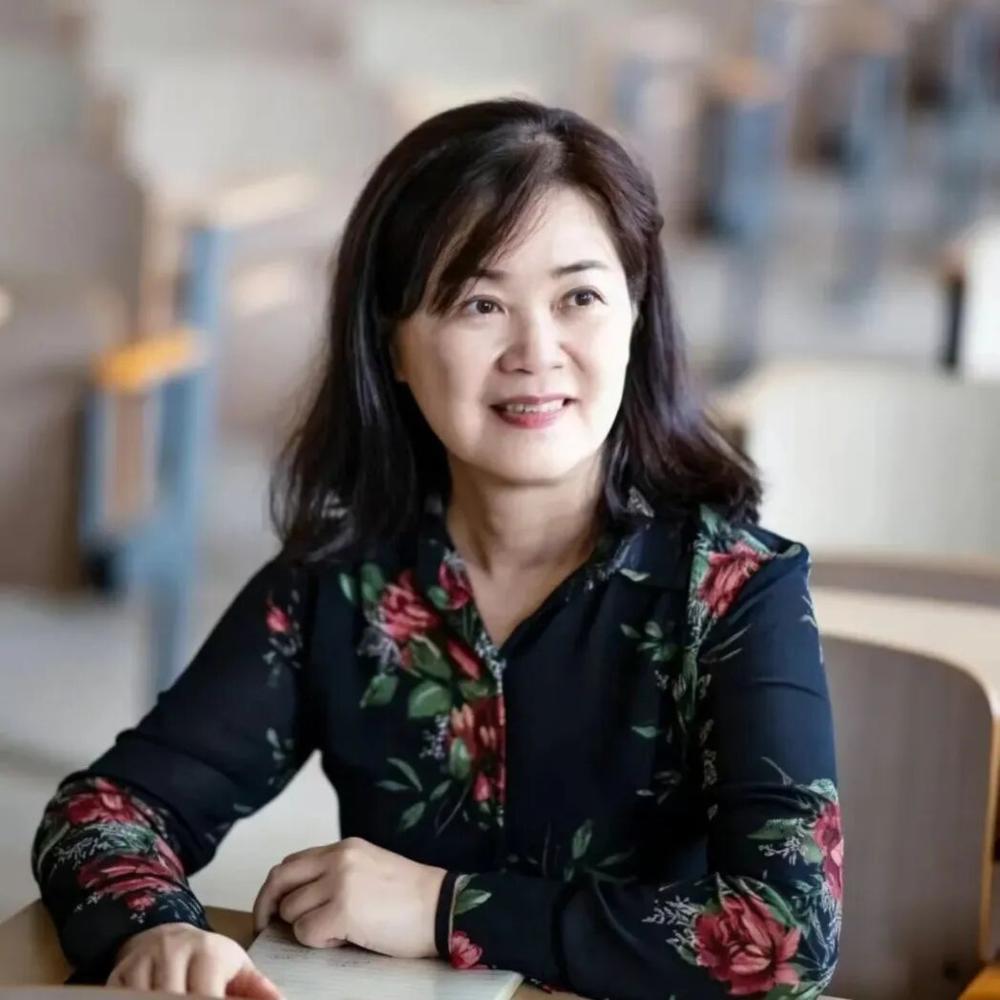
Lang Lihua, Professor, Doctoral Supervisor, Former Dean of the School of Economics, current member of the Academic Committee of CUEB. She teaches courses such as International Economics , International Business , International Trade , and Development Economics to Chinese and international students, with research interests in = international trade theory and policy as well as issues related to economic globalization. She has translated and published The Cambridge Economic History of Europe (Vol. 1) , and has presided over and completed multiple national and provincial projects, including Beijing Social Science Planning Projects and sub-projects of the National Social Science Fund. She has won awards such as the Beijing Philosophy and Social Sciences Award, the Ministry of Commerce Research Award for Business Development, and the Beijing Higher Education Teaching Achievement Award, as well as honorary titles including Beijing “Teaching Model,” “High-Innovation Model,” “Four Batches of Talents Award,” and “Exemplary Educator.” She concurrently serves as Vice President of Beijing Academy of International Economy and Trade and Standing Director of China Association of International Trade.
HOT NEWS
- 1 Shi Yong, Academician of TWAS, Lectures at CUEB on Beijing Digital Eco...
- 2 Shi Yong, Academician of TWAS, Lectures at CUEB on Beijing Digital Eco...
- 3 2026 Alumni Sports & Garden Fair Held on Campus
- My Story with CUEB International Students | Lang Lihua: Where Global W...
- CUEB Unveils Theme and Logo for the 70th Anniversary Celebrations