
CUEB Unveiled Overseas Chinese Research Center
On December 12, the inauguration ceremony of CUEB Overseas Chinese Research Center was held at the Qizhu Gongwen Building.
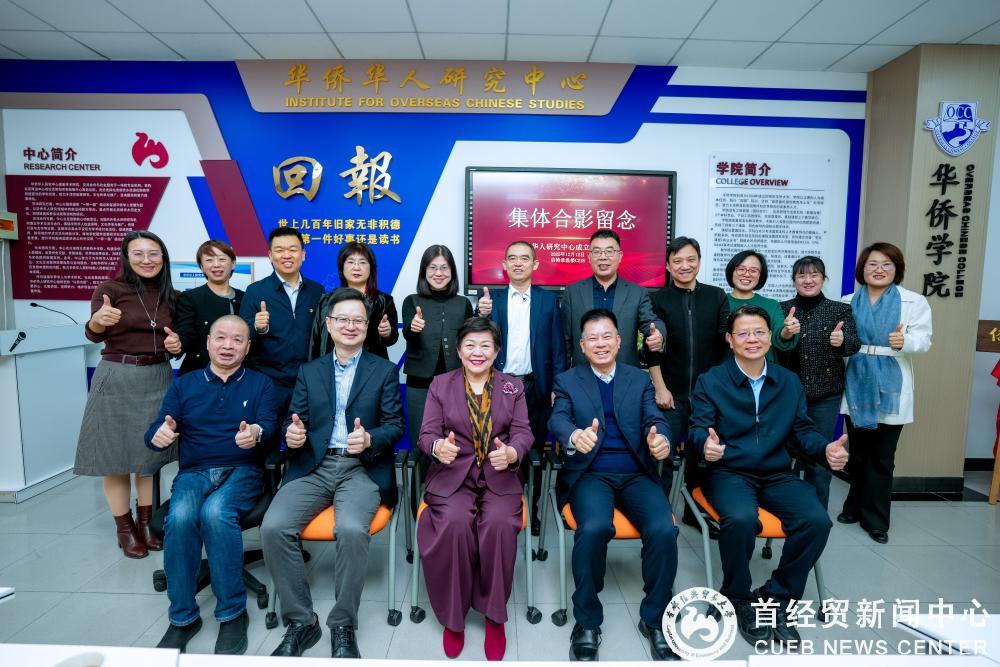
Guests from various sectors, including the overseas Chinese affairs system, academic institutions and community-level overseas Chinese Federations, gathered with university leaders, teachers and students to witness this important historical moment. Attendees included Yang Boxun, Party Branch Secretary, Executive Director and Chief Editor-in-Chief of China Overseas Chinese Publishing House; Ning Yi, Deputy Director (Presiding Officer) of China Overseas Chinese History Museum; Ding Zhiyan, Deputy Director of the United Front Work Department of Fengtai District Committee and Chairperson of the District Overseas Chinese Federation; Wang Linda, Chairperson of the Overseas Chinese Association of Yihai Garden Community; Deng Yanxi, Chairperson of the Overseas Chinese Association of China University of Geosciences (Beijing); and Ouyang Qin, Deputy Party Secretary of CUEB. Cui Ying, Secretary of the Party Committee of the Overseas Chinese College of the CUEB, presided over the ceremony.
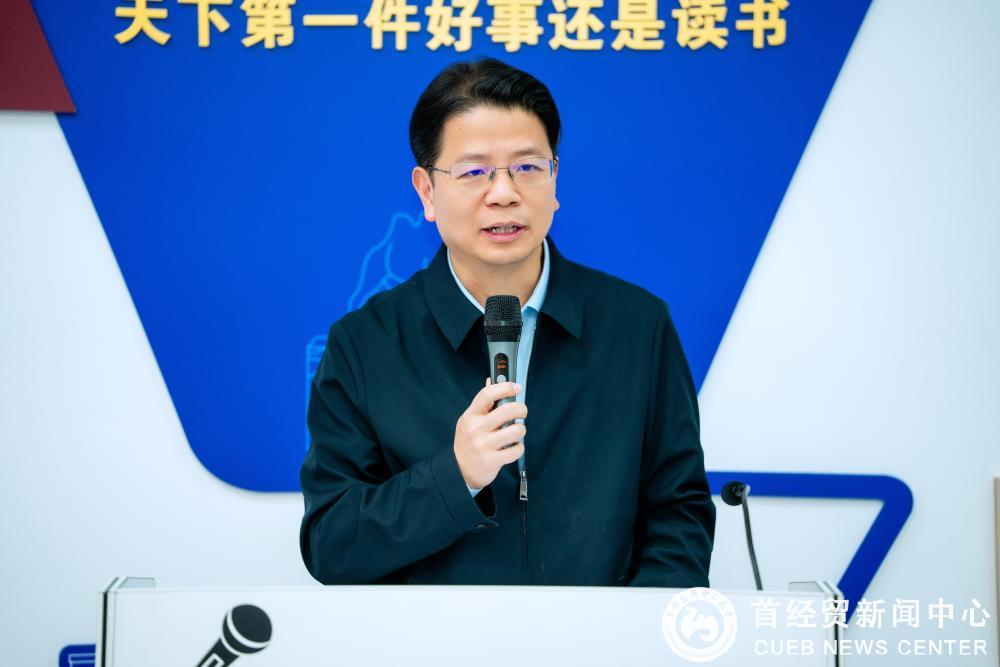
Ouyang Qin noted that the Overseas Chinese College could be traced back to Yanjing Overseas Chinese University, which was founded in 1984. Since its establishment 41 years ago, the College has adhered to the university’s motto of “Advocating Morality, Valuing Competence, Strategizing National Development, and Serving the People”, which embodied the spirit of “rewarding”. Relying on the Overseas Chinese College, CUEB has established the Overseas Chinese Research Center, which not only further highlights the college’s distinctive feature of “Qiao” (overseas Chinese), but also demonstrates its responsibility in facilitating the high-quality development of overseas Chinese affairs. He stressed that the Center should adhere to the principle of “openness, collaboration, innovation and pursuit of excellence”. By leveraging the geographical advantage of Beijing as a new hub for overseas Chinese and the university’s strengths in economics, management, and law, the Center should focus on the following three tasks:
First, deepen fundamental academic research to construct a theoretical framework for overseas Chinese studies that reflect the features of Beijing as a new overseas Chinese hub. This will support the national “Belt and Road” Initiative and advance overseas Chinese development.
Second, establish a platform for exchange and cooperation that addresses the concerns and practical needs of the overseas Chinese community, link academic resources at home and abroad, and build a high-end think tank platform integrating research, consulting, personnel training and international cooperation.
Third, support the development of overseas Chinese affairs by providing targeted services, addressing their concerns, fostering patriotism and love for the homeland, and cultivating a positive social environment that understands, cares for, and safeguards the interests of overseas Chinese.
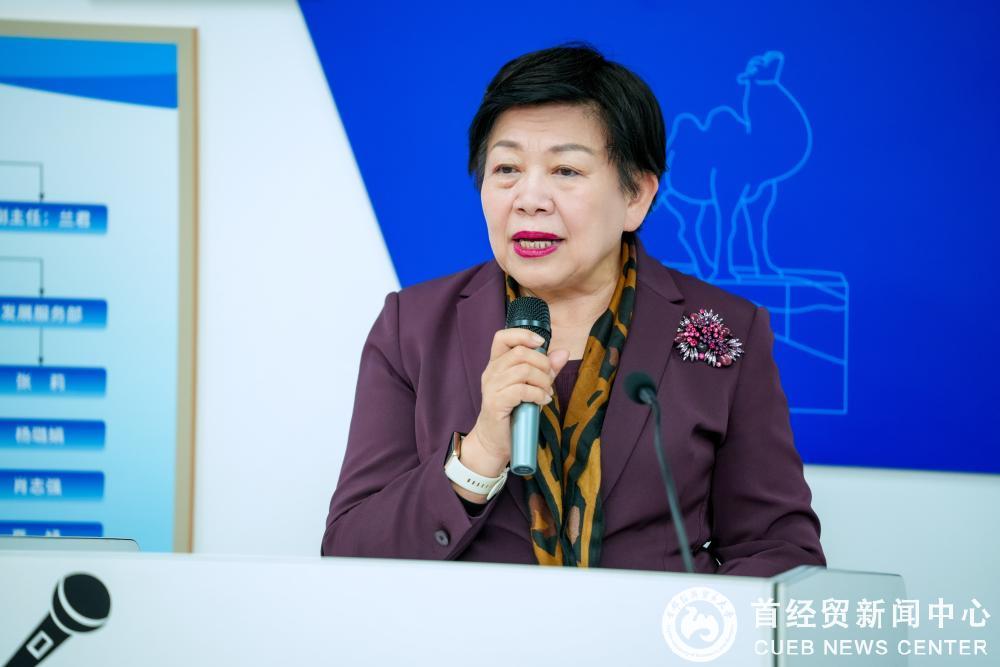
Wang Linda, a specially appointed expert advisors, noted that the Overseas Chinese Association of Yihai Garden Community will fully support the development of the Center. It would provide grassroots-level scenarios for overseas Chinese affairs practice, facilitate the deeper integration of academic research and community practice, and jointly create a new model of overseas Chinese affairs that integrates “academic research” and “community practice”. She expected the Center to further deepen academic research, strengthen bridges and services to help the overseas Chinese community play a bigger role in community governance and cultural heritage.
Li Baixing, Deputy Secretary of the Party Committee and Dean of the Overseas Chinese College, detailed the Center’s preparation process and development plan. He said that the Center aims to “enhance the overseas Chinese brand and build a distinctive platform” for “academic research, cooperative exchange and social services”. On the one hand, we will undertake foundational work, including systematizing the historical archives of the Overseas Chinese College and compiling biographies of overseas Chinese donors. On the other hand, we will carry on the long-term plans by hosting the Northern Forum on Overseas Chinese Studies and publishing the Blue Book on the Development of New Overseas Chinese Hometowns, aiming to gradually make landmark achievements and establish a hub for overseas Chinese affairs studies with distinctive CUEB features.
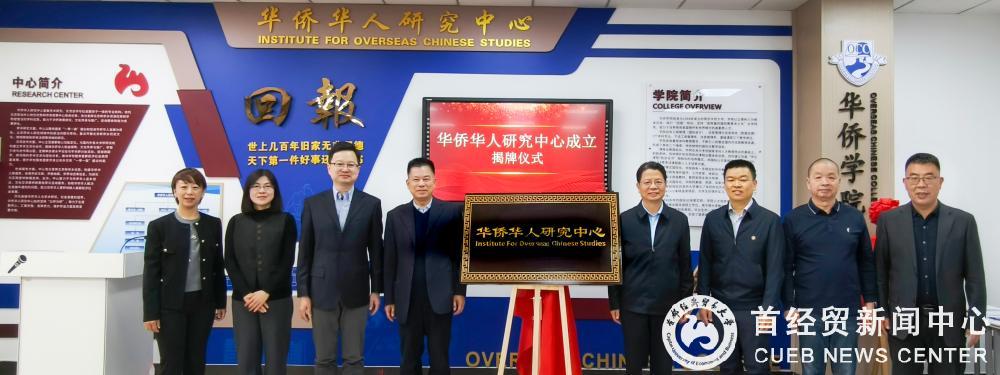
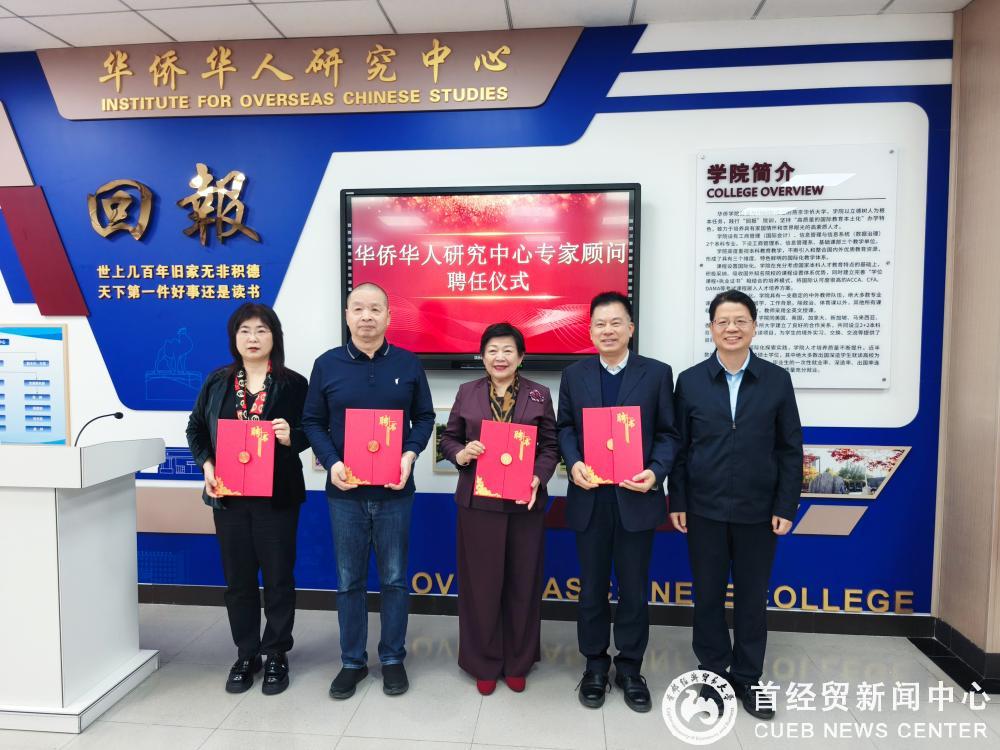
Yang Boxun, Ning Yi, Ding Zhiyan, Ouyang Qin, Zhao Guang and Zhang Jun jointly unveiled the plaque for the Overseas Chinese Research Center, marking the start of its official operations. Following this, at the expert consultant appointment ceremony, Ouyang Qin presented letters of appointment to four experts from the overseas Chinese and academic circles: Yang Boxun, Wang Linda, Deng Yanxi and Zhang Jun.
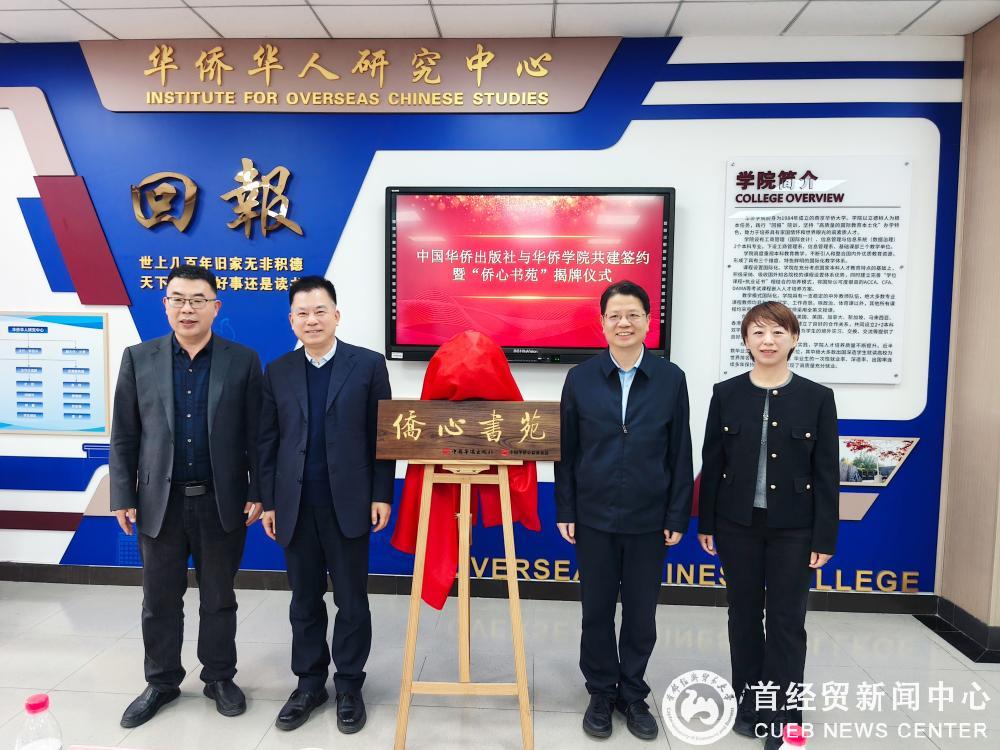
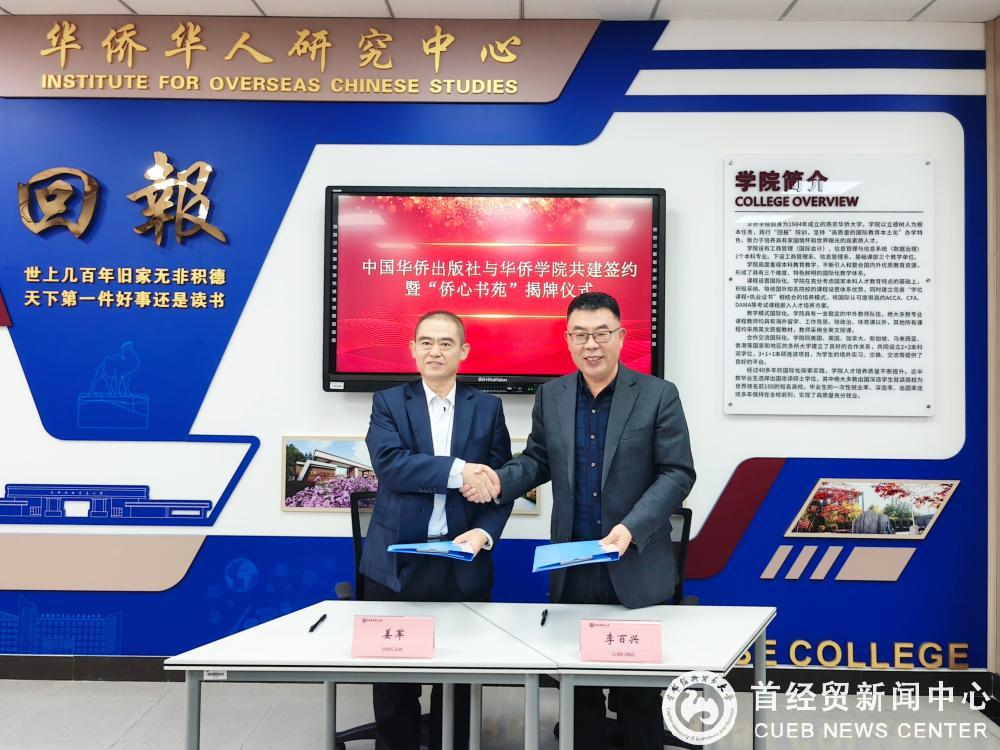
The event also included the signing ceremony of the joint construction between China Overseas Chinese Publishing House and Overseas Chinese College and the unveiling ceremony of “Overseas Chinese Heart Bookstore”. On behalf of both parties, Jiang Jun and Li Baixing, directors of the Comprehensive Editorial Department of China Overseas Chinese Publishing House, signed the contract. Yang Boxun and Ouyang Qin jointly unveiled the “Overseas Chinese Heart Bookstore”. This collaboration aims to create a significant opportunity for the university’s teachers and students to study and disseminate overseas Chinese culture, while also establishing a robust platform for university-enterprise cooperation and holistic education.
The establishment of the Overseas Chinese Research Center not only fully reflects the Overseas Chinese College’s commitment to inheriting the “overseas Chinese” legacy, promoting the “overseas Chinese” spirit, highlighting the distinctive “overseas Chinese” characteristics, and practicing the “rewarding” motto, but also represents a significant initiative by the College to serve the high-quality development of overseas Chinese affairs in the capital. This leverages Beijing’s geographical advantage as a new overseas Chinese hub and CUEB’s strengths in management-related disciplines. Moving forward, the Research Center will contribute further to the development of Beijing as a new overseas Chinese hub and the high-quality development of overseas Chinese affairs through rigorous scholarship, innovative research, inclusive cooperation and dedicated service.
Attendees also included Zhao Guang, Standing Committee Member of the University Party Committee and Minister of the Organization Department and the United Front Work Department; Zhang Jun, Chairperson of the University’s Overseas Chinese Association; all members of the School’s Executive Committee; and student representatives from the Overseas Chinese College.
HOT NEWS
- 1 CUEB President Wu Weixing Meets with GIMPA President Samuel K. Bonsu
- 2 CUEB President Wu Weixing Meets with GIMPA President Samuel K. Bonsu
- 3 CUEB Holds the 4th International Young Scholars Forum
- School of International Education Organizes Cultural Experience for In...
- 喜报 | 首经贸192位学者入选“2025中国知网高被引学者”名单