
Cloisonné Enamel: Intangible Cultural Heritage Workshop Co-hosted by School of International Education & Office of Logistics Services
On November 28, School of International Education and Office of Logistics Services jointly organized a salon titled “Camel Charm & Chinese Style,” salon on Cloisonné Enamel, national intangible cultural heritage and one of Beijing’s Eight Imperial Handicrafts. Twenty international students from various countries gathered to create their own Cloisonné Enamel craftwork, immersing themselves in the profound heritage of Chinese culture.
The workshop began with an instructor introducing the history and techniques of Cloisonné through visuals and examples. As a national intangible cultural heritage, Cloisonné—also called Fetal copper filigree enamel—represents a perfect fusion of metal and enamel. Originating in the Yuan Dynasty and flourishing during the Ming and Qing dynasties, it was listed among China’s first national intangible cultural heritage items in 2006. The craft involves intricate steps such as base-making, wire-inlaying, enamel-filling, and firing. Its vibrant, long-lasting colors, derived from metal-oxides blends, while motifs like dragons, phoenixes, and intertwining lotus patterns reflect both cultural exchange and the luxurious aesthetics of Ming and Qing imperial courts. This art form epitomizes the Chinese culture of “exquisite materials and superb craftsmanship”.
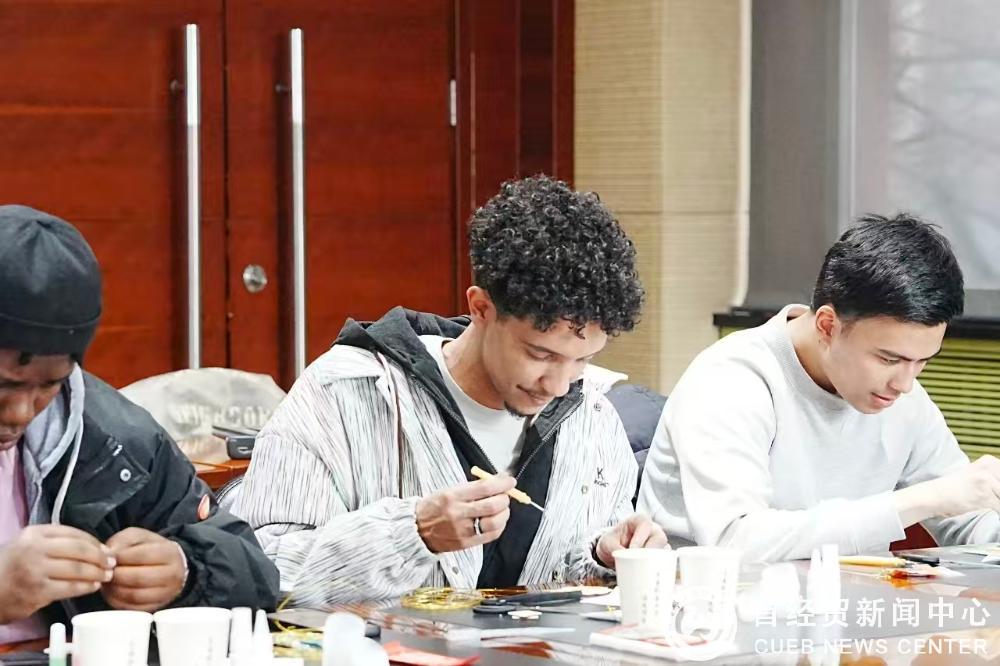
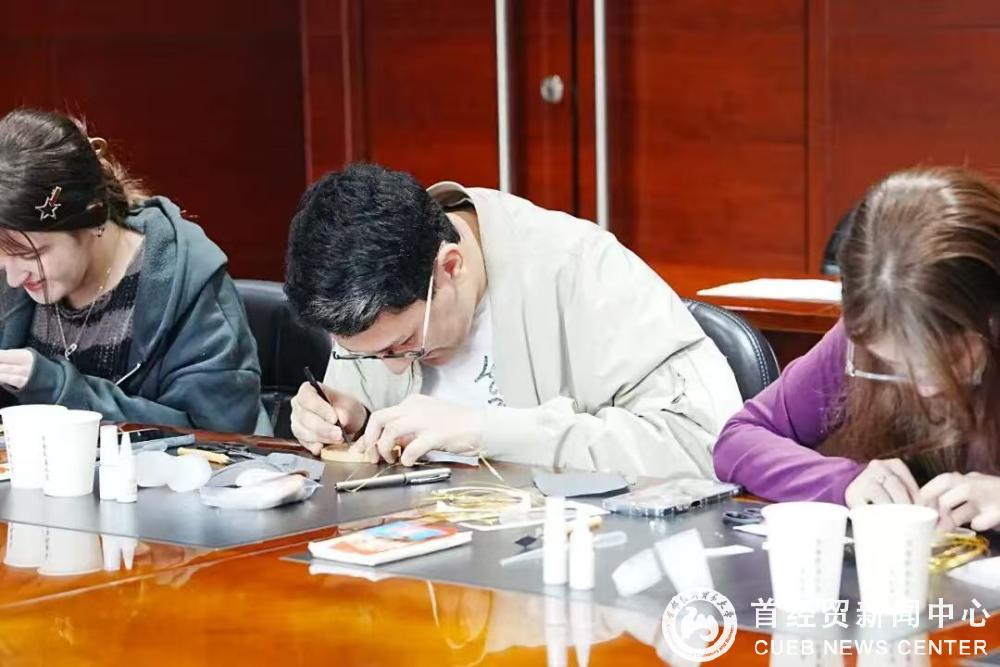
During the practice, students gained material kits containing metallic, colored sand, and adhesive, made their works step by step, from transferring and fixing the line drafts. Wu Xin, a student from Tajikistan shared, “The copper wires seem soft, but placing them precisely along the pattern is challenging. Controlling the amount of colored sand also requires skill—this really helped me understand the meaning of ‘craftsmanship spirit’.” Maryam from Morocco expressed her lively fascination with the color palette: “The interplay of blue paon, blue sapphire, and coral red is stunning. Each color seems to tell an Oriental story.”
After hours, students completed unique Cloisonné Enamel handicraft like bookmarks, fridge magnets, and coasters. Through the practice, they not only learned about the development course of Cloisonné Enamel from its introduction to China in the Yuan Dynasty to its innovation in modern times, but also gained a deep understanding of the auspicious culture embedded in its patterns—such as bats for “good fortune,” lotuses for “purity,” and meander motifs for “endless continuity.” Everyone agreed that this immersive experience helped them feel the vitality of traditional Chinese craftsmanship.
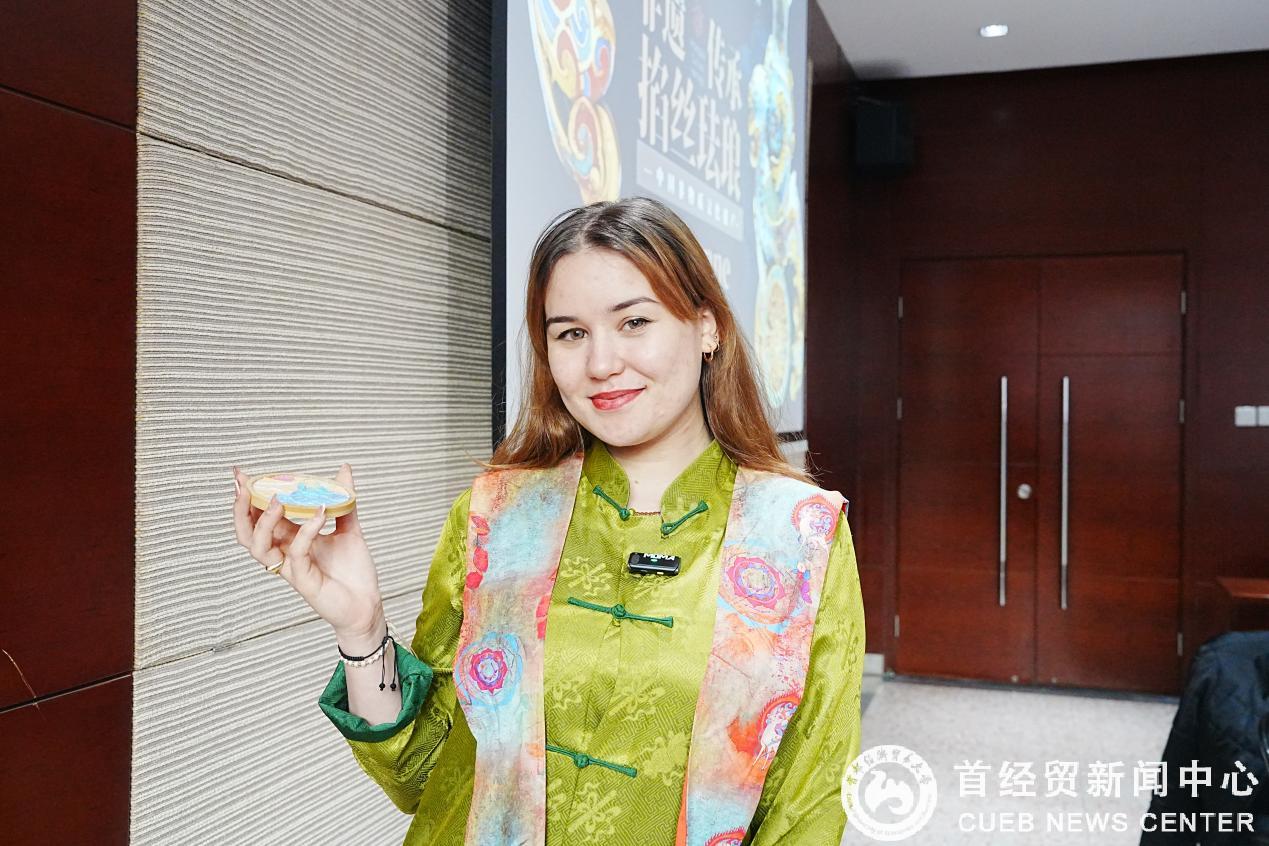
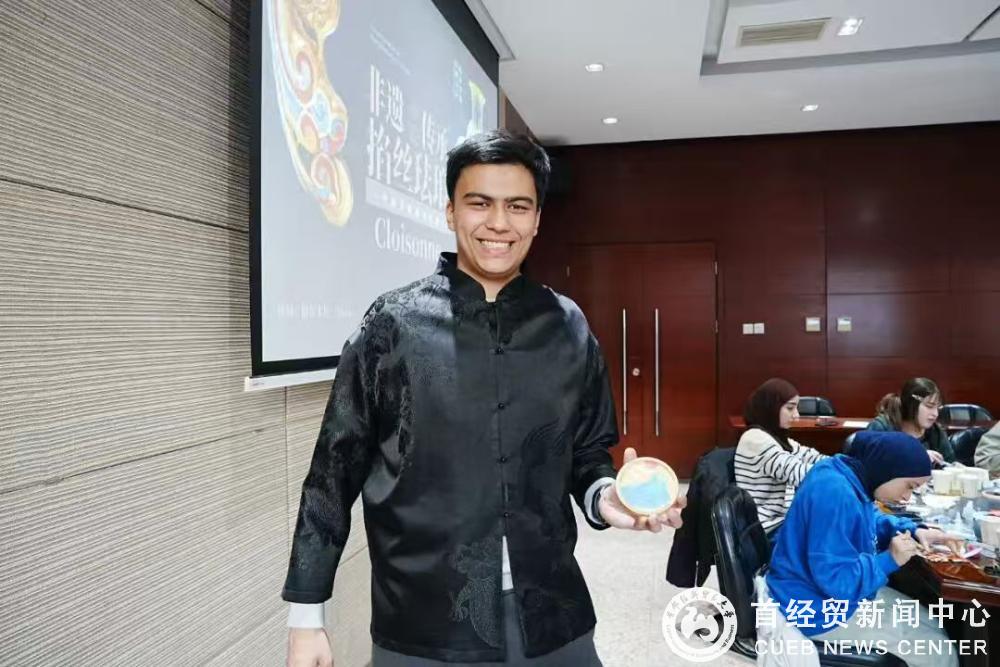
This initial collaboration between School of International Education and Office of Logistics Services represents an innovative endeavor of the university in advancing full-factor practical ideological and political education. Through exploring on-campus collaborative education pathways, the initiative not only promotes traditional Chinese culture and disseminates China’s voice globally, but also allows international students to experience the allure of intangible cultural heritage through hands-on practice. Moving forward, the both sides will continue the exploration of collaborative education mechanisms, ensuring that the “Great Ideological and Political Education in micro-classrooms” keeps thriving on the campus of CUEB.
HOT NEWS
- 1 CUEB Holds Unveiling Ceremony for “National Civilized Campus”
- 2 CUEB Holds Unveiling Ceremony for “National Civilized Campus”
- 3 CUEB Holds First Academic Seminar on ESG and Sustainable Development o...
- Cloisonné Enamel: Intangible Cultural Heritage Workshop Co-hosted by S...
- Ma Zhiming, Academician of the Chinese Academy of Sciences, Lectures a...