
CUEB Holds First Academic Seminar on ESG and Sustainable Development of Chinese Enterprises
On November 28, CUEB held the first Academic Seminar on ESG and Sustainable Development of Chinese Enterprises themed “Digitalization and Greenization under the Context of Sustainable Development”. Supported academically by Management World , the seminar was co-sponsored by Renmin University of China, University of International Business and Economics, and CUEB, and undertaken by CUEB’s China ESG Institute, School of Business Administration, School of Accounting, and School of Economics. It also received supports from renowned journals including Research on Economics & Management , Journal of Capital University of Economics and Business , International Review of Economics & Finance , and Managerial and Decision Economics , as well as technical supports from Shanghai Wind Information Co.,Ltd.
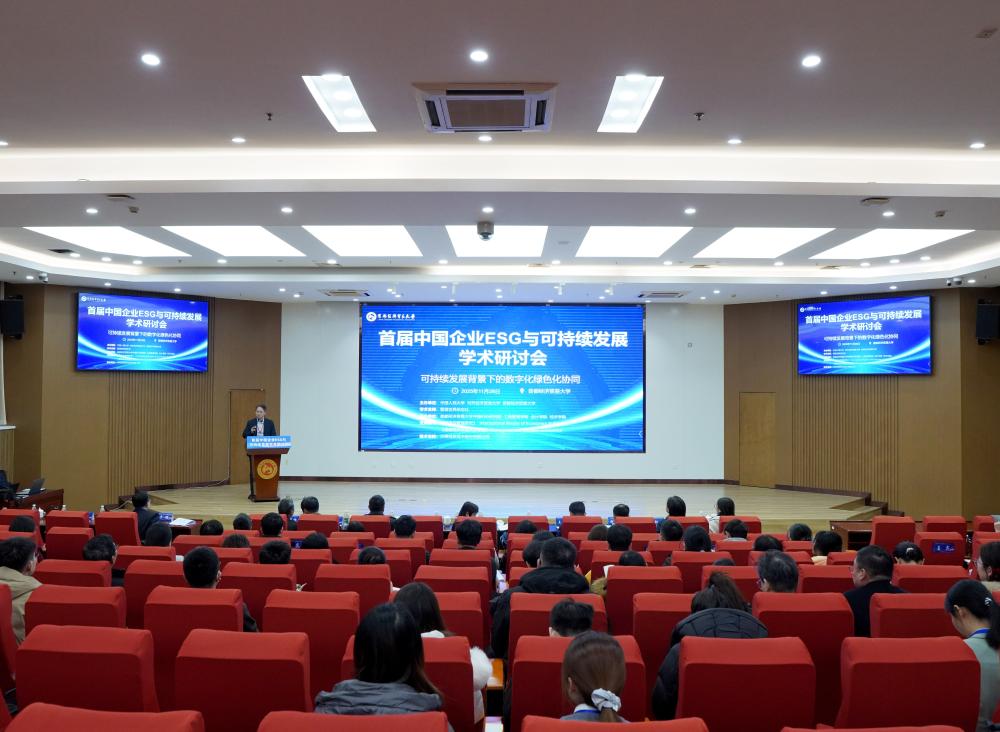
本次大会有来自中国人民大学、对外经济贸易大学、中国社会科学院大学、北京师范大学、北京交通大学、厦门大学、武汉大学、山东大学、中央财经大学、西南财经大学、东北财经大学等单位的专家、学者、研究生共150余人共同参会,围绕ESG与可持续发展的前沿理论与实践路径,深入剖析企业如何更好地践行数字化绿色化协同转型理念,为中国企业在新时代背景下实现可持续发展贡献智慧与力量。
Over 150 experts, scholars, and postgraduates from different universities such as Renmin University of China, University of International Business and Economics, University of Chinese Academy of Social Sciences, Beijing Normal University, Beijing Jiaotong University, Xiamen University, Wuhan University, Shandong University, Central University of Finance and Economics, Southwestern University of Finance and Economics, and Dongbei University of Finance and Economics attended the seminar. Focusing on cutting-edge theories and practical approaches of ESG and sustainable development, they thoroughly analyzed how enterprises can better advance Digitalization and Greenization, contributing wisdom and strength to the sustainable development of Chinese enterprises in the new era.
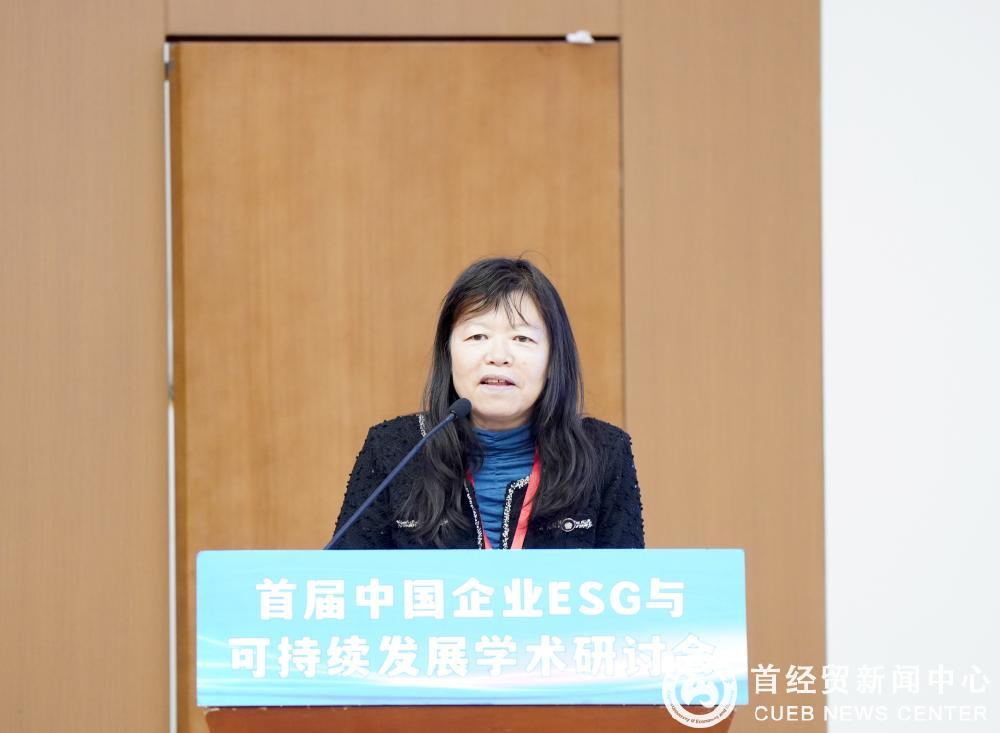
Bai Jingwei, Deputy Editor-in-Chief of Management World , delivered the opening speech. She pointed out that accelerating Digitalization and Greenization is an inevitable way to seize the great opportunity of the new round of technological revolution and a key support for actively cultivating and developing new quality productive forces. The ultimate goal of promoting “Dual Transformation and Coordination” is to achieve sustainable development, which is not only an urgent requirement for harmony between humanity and nature but also a necessary choice for the prosperity and progress of human society. As an academic journal long focusing on overall and strategic issues, Management World has always closely followed national strategic needs and paid high attention to the theoretical and practical issues in the “Dual Transformation and Coordination”. It has organized major topics, set up special columns, and published a number of high-quality, influential papers supported by Chinese cases and data, providing academic supports for revealing the inherent mechanisms. She stated that in the future, Management World will continue to focus on major topics and high-quality publications, commit to building China’s independent knowledge system, and provide an exchange platform for the academic community, offering supports and solutions. We look forward to more scholars publishing their outstanding achievements in Management World to jointly contribute to the advancement of research in related fields in China.
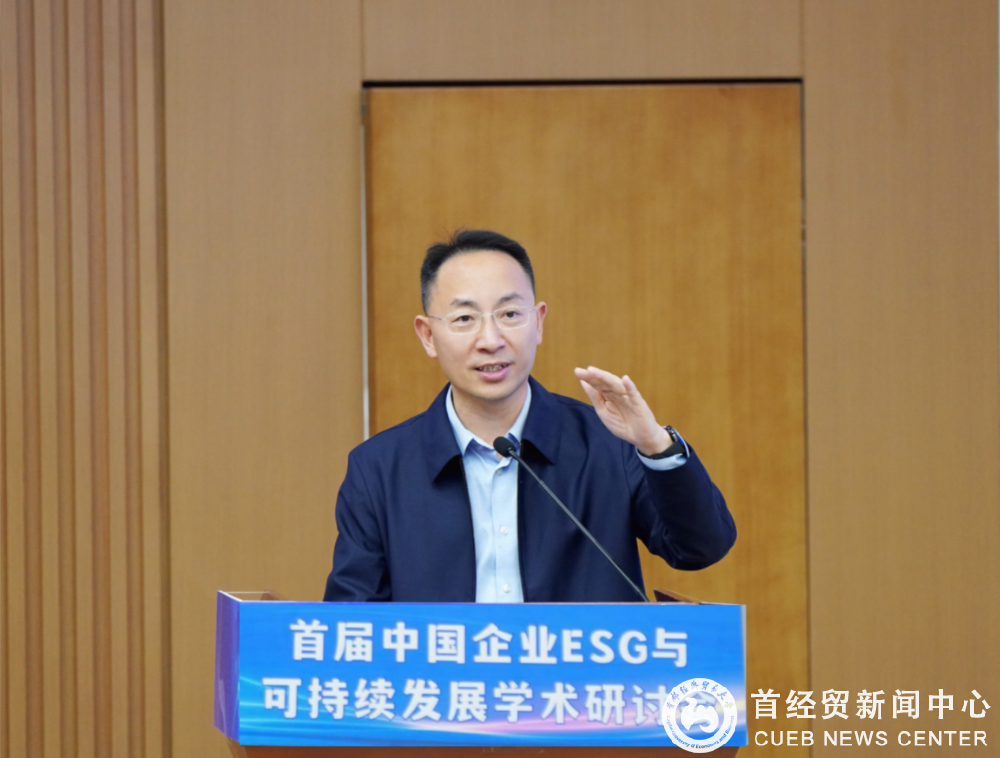
Yin Zhichao, Vice President and Member of the Standing Committee of CUEB Party Committee, delivered a speech. He pointed out that ESG, as a systematic concept covering the three dimensions of environment, society, and governance, is becoming an important starting point for promoting the development of new quality productive forces and realizing the comprehensive green transformation of the economy and society. ESG is not only a “compass” for enterprises’ transformation and upgrading but also a “booster” for cultivating new momentum and fostering new advantages. He emphasized that as a key high-level research university in Beijing, CUEB has carried out a series of studies on ESG, sustainable development, green governance, etc., and advanced a number of influential academic achievements and policy recommendations. However, it also faces challenges such as how to build an ESG disclosure and evaluation system suitable for China’s situation, how to truly promote the synergy between digitalization and greenization in enterprise development, and how to guide the efficient allocation of factors such as capital, technology, and expertise to the ESG field. To address these issues, he called on all participants to further discuss, pool wisdom, and jointly contribute insightful views to the ESG and sustainable development of Chinese enterprises, so as to provide strong supports for building an ESG theoretical system and practical path with Chinese characteristics.
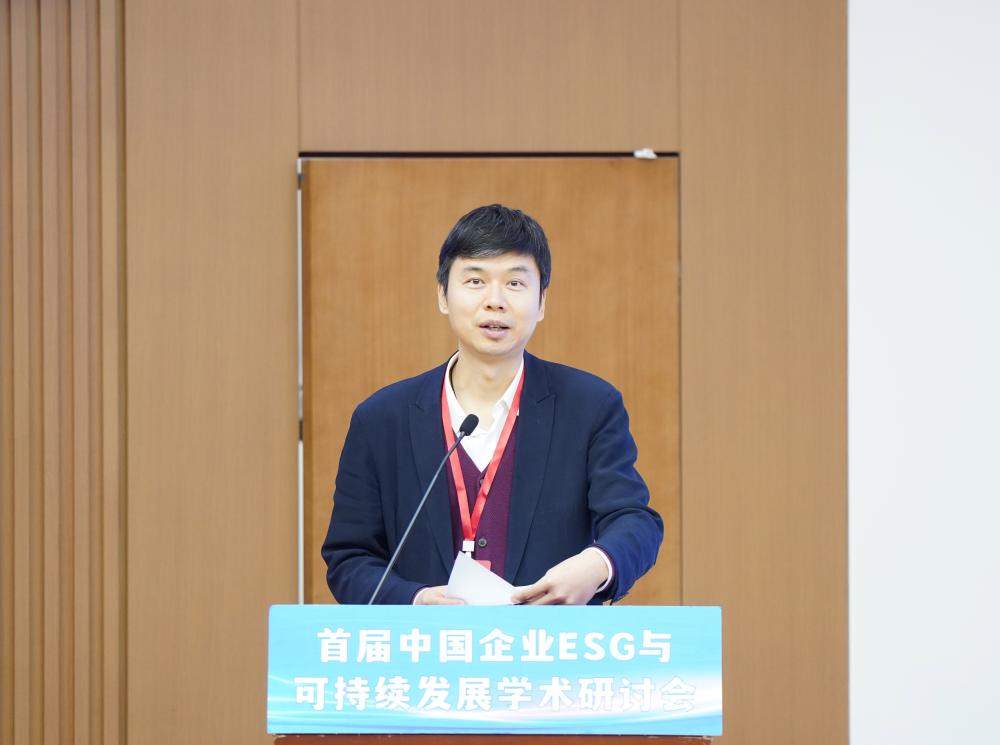
Yi Jingtao, Dean of the School of Business at Renmin University of China, delivered a speech. He pointed out that under the guidance of the “dual carbon” strategy, digitalization and greenization have become important trends in global economic and social development, and academic peers need to work together to make greater contributions to promoting green development and realizing harmony between humanity and nature. Yi emphasized that as a pivotal platform connecting academia and industry, the business administration discipline must proactively follow national strategies and shoulder the important mission of cultivating interdisciplinary personnel and building China’s independent ESG theoretical system. Researches should transcend traditional business frameworks to serve national strategies and the co-creation of diverse values. Scientific research innovation needs to expand from traditional topics to the interactive relationships between enterprises, society, and the environment. Meanwhile it is necessary to deepen academic empowerment, develop synergy among industries, universities and research institutes, and effectively transform academic achievements into policy recommendations and practical guidelines. He further stated that exploring the “Dual Transformation and Coordination” with Chinese characteristics and building a local ESG theoretical system can not only enhance the international academic say of Chinese management studies but also contribute Chinese wisdom and solutions to global sustainable development. Finally, on behalf of the School of Business at Renmin University of China, he expressed his willingness to work with peers from all walks of life to advance Digitalization and Greenization under the context of sustainable development and contribute wisdom and strength to promote the high-quality development of the Chinese economy.
During the keynote speech session, participating experts shared cutting-edge research findings. Professor Zeng Xiaoliang from Southern University of Science and Technology systematically reviewed the evolution of literature on ESG information disclosure and proposed new concepts like “financial framing”. Wang Zhaohua, Dean of the School of Economics at Beijing Institute of Technology, demonstrated the exploration and application of multimodal big data in driving low-carbon transitions across key sectors such as energy and architecture. Zhu Jigao, Associate Dean of the UIBE Business School, presented a study based on the random inspection and supervision practice of overseas investment by the Ministry of Commerce, revealing the effective role of home country government supervision in improving the ESG performance of multinational corporations and its cross-border spillover effects.
A total of 244 papers were submitted to the seminar, and 48 outstanding papers were finally selected. Seven parallel sub-forums were set up, focusing on in-depth discussions on key topics including climate policy and risk management, ESG information disclosure, green technological innovation, supply chain collaboration, corporate governance, and digital empowerment. Following presentations in each sub-forum, first, second, and third prizes were selected through reviews and scoring by reviewers, and certificates were awarded to the winners by the review experts of each sub-forum.
This seminar systematically examined the key pathways and implementation mechanisms of ESG in driving enterprises’ green transformation and high-quality development, injecting fresh new momentum into advancing ESG theoretical research and practical innovation. With the continuous improvement of China’s ESG ecosystem, its role in optimizing resource allocation optimizing resource allocation, stimulating technological innovation, and promoting the integration of the real and digital economies will become increasingly prominent. We hope this seminar will serve as a new starting point, enabling all parties to continuously promote cutting-edge exploration in the ESG field, facilitate the effective transformation of academic achievements into policy practices and corporate actions, and contribute more wisdom and strength to achieving comprehensive green transformation of the economy and society while advancing the construction of Chinese-style modernization.
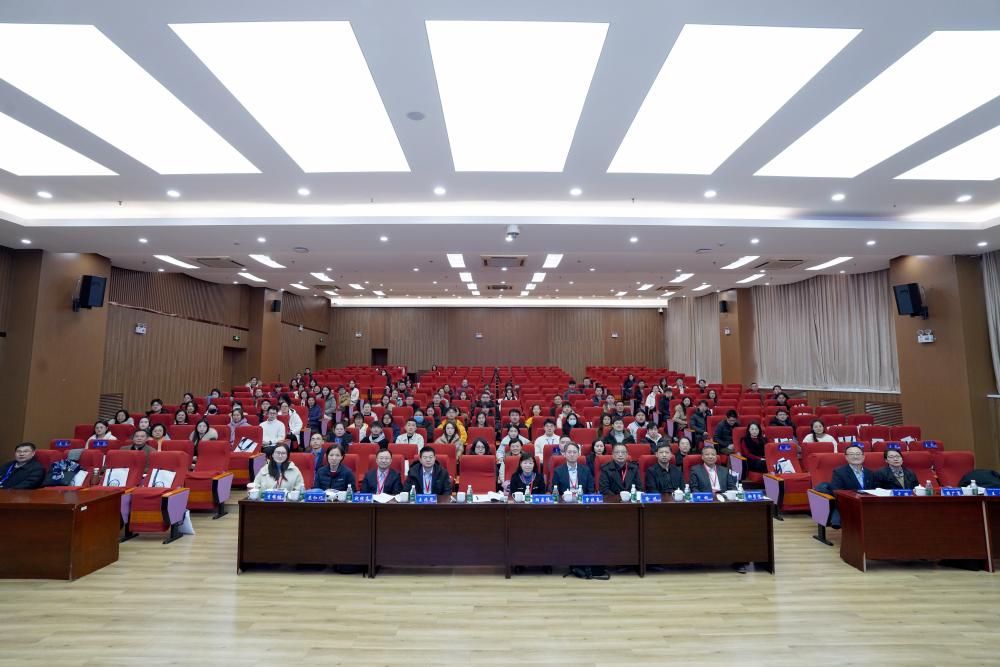
The opening ceremony of the seminar was hosted by Liu Xuexin, Executive Dean of the Institute for Sustainable Development and Director of the Experimental Education Center at CUEB. The keynote speech session was hosted by Yu Peng, Dean of the School of Accounting, and Wang Kai, Deputy Dean of the School of Business Administration and Deputy Dean of the Institute for Sustainable Development.
HOT NEWS
- 1 CUEB Holds Unveiling Ceremony for “National Civilized Campus”
- 2 CUEB Holds Unveiling Ceremony for “National Civilized Campus”
- 3 CUEB Holds First Academic Seminar on ESG and Sustainable Development o...
- Ma Zhiming, Academician of the Chinese Academy of Sciences, Lectures a...
- CUEB Hosts 14th International Conference on Futures and Derivatives